Deep Learning Anti-Aliasing (DLAA) is a form of spatial anti-aliasing developed by Nvidia. DLAA depends on and requires Tensor Cores available in Nvidia RTX cards. DLAA is similar to Deep Learning Super Sampling (DLSS) in its anti-aliasing method, with one important differentiation being that the goal of DLSS is to increase performance at the cost of image quality, whereas the main priority of DLAA is improving image quality at the cost of performance (irrelevant of resolution upscaling or downscaling). DLAA is similar to temporal anti-aliasing (TAA) in that they are both spatial anti-aliasing solutions relying on past frame data. Compared to TAA, DLAA is substantially better when it comes to shimmering, flickering, and handling small meshes like wires. == Technical overview == DLAA collects game rendering data including raw low-resolution input, motion vectors, depth buffers, and exposure information. This information feeds into a convolutional neural network that processes the image to reduce aliasing while preserving fine detail. The neural network architecture employs an auto-encoder design trained on high-quality reference images. The training dataset includes diverse scenarios focusing on challenging cases like sub-pixel details, high-contrast edges, and transparent surfaces. The network then processes frames in real-time. Unlike traditional anti-aliasing solutions that rely on manually written heuristics, such as TAA, DLAA uses its neural network to preserve fine details while eliminating unwanted visual artifacts. == History == DLAA was initially called and marketed by Nvidia as DLSS 2x. The first game that added support for DLAA was The Elder Scrolls Online, which implemented the feature in 2021. By June 2022, DLAA was only available in six games. This number rose to 17 by February 2023. In June 2023, TechPowerUp reported that "DLAA is seeing sluggish adoption among game developers", and that Nvidia was working on adding DLAA to the quality presets of DLSS to boost adoption. By December 2023, DLAA was supported in 41 games. In early 2025, an update for the Nvidia App added a driver-based DLSS override feature that enables users to activate DLAA even in games that do not support it natively. == Differences between TAA and DLAA == TAA is used in many modern video games and game engines; however, all previous implementations have used some form of manually written heuristics to prevent temporal artifacts such as ghosting and flickering. One example of this is neighborhood clamping which forcefully prevents samples collected in previous frames from deviating too much compared to nearby pixels in newer frames. This helps to identify and fix many temporal artifacts, but deliberately removing fine details in this way is analogous to applying a blur filter, and thus the final image can appear blurry when using this method. DLAA uses an auto-encoder convolutional neural network trained to identify and fix temporal artifacts, instead of manually programmed heuristics as mentioned above. Because of this, DLAA can generally resolve detail better than other TAA and TAAU implementations, while also removing most temporal artifacts. == Differences between DLSS and DLAA == While DLSS handles upscaling with a focus on performance, DLAA handles anti-aliasing with a focus on visual quality. DLAA runs at the given screen resolution with no upscaling or downscaling functionality provided by DLAA. DLSS and DLAA share the same AI-driven anti-aliasing method. As such, DLAA functions like DLSS without the upscaling part. Both are made by Nvidia and require Tensor Cores. However, DLSS and DLAA cannot be enabled at the same time, only one can be selected depending on whether performance or image quality is prioritized. == Reception == TechPowerUp found that "[c]ompared to TAA and DLSS, DLAA is clearly producing the best image quality, especially at lower resolutions", arguing that, while "DLSS was already doing a better job than TAA at reconstructing small objects", "DLAA does an even better job". In a Cyberpunk 2077 performance test, IGN stated that "DLAA provided somewhat similar results [FPS wise] to the normal raster mode in most cases but got significant performance boost with the help of frame generation", a feature not available when using native resolution. Rock Paper Shotgun noted that, while DLAA is "not a completely perfect form of anti-aliasing, as the occasional jaggies are present", it "looks a lot sharper overall [than TAA], and especially in motion." According to PC World, "DLAA offers very good anti-aliasing without losing visual information — alternatives like TAA tend to struggle during motion-filled scenes, where DLAA doesn’t. Furthermore, DLAA’s loss of performance is lower than with conventional anti-aliasing methods."
Biohybrid system
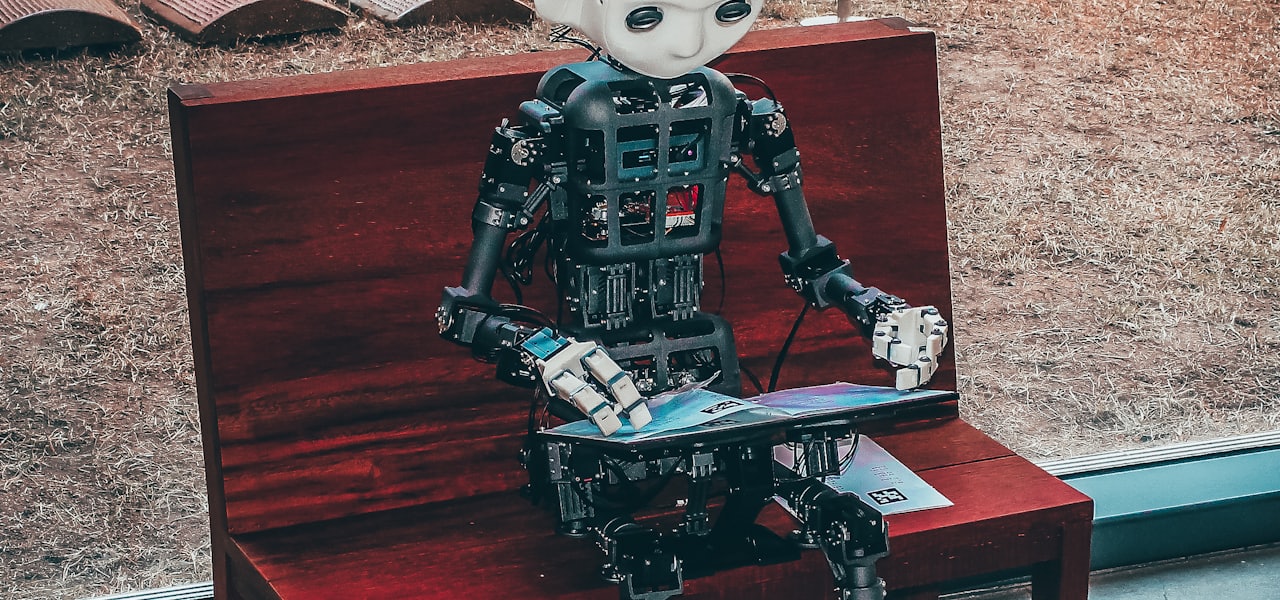
Biohybrid systems refer to the integration of biological materials, such as cells or tissues, with artificial components, including electronics or mechanical structure. This combination incorporates the capabilities of living organisms with the precision of man-made technology. As a result, these systems perform tasks that neither biology nor machines could achieve independently. Biohybrid systems might use lab-cultured muscle cells to power small robots or combine sensors with living tissue for better health sensing. The intent behind these systems is to combine the benefits of biological and technological components to introduce new solutions for complex medical challenges. Biohybrid systems may have transformative potential across sectors, such as robotics to create actuators and sensors that mimic natural muscle and nerve function, medicine in developing smart implants and drug delivery systems, in prosthetics for enhancing user control through neural or muscular interfaces and environmental sustainability for deploying biohybrid solutions for pollution sensing or remediation. == Origin == The term "biohybrid" is a compound of "bio" from biology (meaning life) and "hybrid" (referring to a combination of distinct elements), denoting a field of study. Its use helps distinguish such systems from purely biological constructs or entirely synthetic machines. Early academic mentions may include bio actuated robotics papers and foundational tissue-robot integration studies published in journals like Nature Biotechnology or Science Robotics. The emergence of the term reflects a growing recognition of the need to describe systems that do not fit cleanly into traditional categories. == Design principles == One of the most significant biohybrid challenges is to engineer interfaces between living tissue and artificial materials that are efficient. This means having precise control over adhesion at the surface, diffusion of nutrients, and signal conduction. Actuation mechanisms within the heart of these systems generate movement or mechanical response. These may be in the form of living muscle cells such as skeletal myocytes or cardiomyocytes, soft pneumatic actuators, or electrical stimulation-responsive tissues. Materials selection is equally critical. Hydrogels, elastomers like PDMS (polydimethylsiloxane), and biopolymers are commonly used due to their softness and biocompatibility. These materials must support cell viability, resist immune attack, and allow the integration of mechanical or electrical components. == Key components == At their core, biohybrid systems work by bridging living biological parts with technology. Through this integration, functionality that neither system could accomplish singularly is possible. Biological parts may be cells, tissues, or even organs—occasionally cultured in a laboratory setting. These biological parts carry out biologically inspired behaviors, such as muscle contraction or chemical sensing in the body. Technological components may constitute devices like sensors, electronic components, and mechanical structure. These manipulate the system, supply power, or transfer data. An example is a sensor that is implantable within a body and detects glucose levels as it sends information to a smart phone. By integrating these artificial and biological parts, biohybrid systems can perform advanced functions, such as tissue regeneration, real-time health monitoring, or the recovery of motor function in paralysis patients. Biohybrid systems generally consist of two major components: the biological and the mechanical. Biological components may include muscle cells for contraction, endothelial cells for vascularization, and stem cells for regenerative capabilities. Mechanical components comprise soft actuators that mimic organic motion, synthetic scaffolds that provide support and structure, and microfluidic systems that facilitate the delivery of nutrients and removal of waste. These components are combined in a manner that allows for dynamic, lifelike behavior—such as the contraction of tissue or the propagation of mechanical waves—while maintaining biocompatibility and durability. == Applications == The range of applications for biohybrid systems is broad and continuously expanding. In robotics, biohybrid structures have been used to engineer microscopic, muscle-driven machines, such as Harvard University's biohybrid stingray robot. In medical applications, they offer new alternatives for organ repair and augmentation, including biohybrid heart valves and esophageal scaffolds. Biohybrids are also promising in neural interfaces, where the goal is to create long-lasting, stable interaction between mechanical devices and brain tissue. Muscle-actuated drug response platforms are under exploration in pharmacology for modelling and real-time screening. == Examples == Several high-profile research projects have demonstrated the potential of biohybrid systems: Harvard researchers developed a biohybrid swimming ray powered by rat cardiac cells layered onto a gold skeleton, mimicking the motion of a real stingray. At the Massachusetts Institute of Technology, a cardiac pump actuated entirely by living heart muscle cells was engineered to simulate the behavior of a beating heart. Bio actuated soft robots have been built to simulate gut peristalsis, using muscle contractions to replicate natural wave-like movement in the digestive tract. == Challenges and limitations == As with many technologies that involve living systems, biohybrid systems raise important ethical and biomedical questions. Cell sourcing remains a key issue, particularly when embryonic or animal-derived cells are used. Long-term viability is another concern—living tissues must be kept alive with nutrients and oxygen, and they often degrade or elicit immune responses when implanted. Powering these biological parts presents logistical and ethical hurdles as well. Systems must either include internal mechanisms for nutrient delivery or be supported externally, which can limit portability and independence. == Future directions == Researchers are exploring self-directed, self-regulated organ substitutes and regenerative implants that can respond to their surroundings in real-time. These systems may be integrated with artificial intelligence to make them adjust to stimuli and coordinate complex behaviors. Future potential applications are wearable biohybrid systems for rehabilitation, space medicine devices for long-duration missions, and implantable devices that integrate into human physiology.
ISO 15765-2
ISO 15765-2, or ISO-TP (Transport Layer), is an international standard for sending data packets over a CAN bus. The protocol allows for the transport of messages that exceed the eight byte maximum payload of CAN frames. ISO-TP segments longer messages into multiple frames, adding metadata (CAN-TP Header) that allows the interpretation of individual frames and reassembly into a complete message packet by the recipient. It can carry up to 232-1 (4294967295) bytes of payload per message packet starting from the 2016 version. Prior versions were limited to a maximum payload size of 4095 bytes. In the OSI model, ISO-TP covers the layer 3 (network layer) and 4 (transport layer). The most common application for ISO-TP is the transfer of diagnostic messages with OBD-II equipped vehicles using KWP2000 and UDS, but is used broadly in other application-specific CAN implementations where one might need to send messages longer than what the CAN protocol physical layer allows (eight bytes for CAN, 64 bytes for CAN FD, and 2048 bytes for CAN-XL). ISO-TP can be operated with its own addressing as so-called Extended Addressing or without address using only the CAN ID (so-called Normal Addressing). Extended addressing uses the first data byte of each frame as an additional element of the address, reducing the application payload by one byte. For clarity the protocol description below is based on Normal Addressing with eight byte CAN frames. In total, six types of addressing are allowed by the ISO 15765-2 Protocol. ISO-TP prepends one or more metadata bytes to the payload data in the eight byte CAN frame, reducing the payload to seven or fewer bytes per frame. The metadata is called the Protocol Control Information, or PCI. The PCI is one, two or three bytes. The initial field is four bits indicating the frame type, and implicitly describing the PCI length. ISO 15765-2 is a part of ISO 15765 (headlined Road vehicles — Diagnostic communication over Controller Area Network (DoCAN)), which has the following parts: ISO 15765-1 Part 1: General information and use case definition ISO 15765-2 Part 2: Transport protocol and network layer services ISO 15765-3 Part 3: Implementation of unified diagnostic services (UDS on CAN) – replaced by ISO 14229-3 Road vehicles — Unified diagnostic services ISO 15765-4 Part 4: Requirements for emissions-related systems == List of protocol control information (PCI) field types == The ISO-TP defines four frame types: A message of seven bytes or less is sent in a single frame, with the initial byte containing the type (0) and payload length (1-7 bytes). With the 0 in the type field, this can also pass as a simpler protocol with a length-data format and is often misinterpreted as such. A message longer than 7 bytes requires segmenting the message packet over multiple frames. A segmented transfer starts with a First Frame. The PCI is two bytes in this case, with the first 4 bit field the type (type 1) and the following 12 bits the message length (excluding the type and length bytes). The recipient confirms the transfer with a flow control frame. The flow control frame has three PCI bytes specifying the interval between subsequent frames and how many consecutive frames may be sent (Block Size). For CAN FD, the ISO 15765-2 protocol has been extended for Single and First frame, to allow larger size values, but still backwards compatible with traditional ISO 15765. See CAN FD. The initial byte contains the type (type = 3) in the first four bits, and a flag in the next four bits indicating if the transfer is allowed (0 = Continue To Send, 1 = Wait, 2 = Overflow/abort). The next byte is the block size, the count of frames that may be sent before waiting for the next flow control frame. A value of zero allows the remaining frames to be sent without flow control or delay. The third byte is the minimum Separation Time (STmin), the minimum delay time between frames. STmin values up to 127 (0x7F) specify the minimum number of milliseconds to delay between frames, while values in the range 241 (0xF1) to 249 (0xF9) specify delays increasing from 100 to 900 microseconds. Note that the Separation Time is defined as the minimum time between the end of one frame to the beginning of the next. Robust implementations should be prepared to accept frames from a sender that misinterprets this as the frame repetition rate i.e. from start-of-frame to start-of-frame. Even careful implementations may fail to account for the minor effect of bit-stuffing in the physical layer. The sender transmits the rest of the message using Consecutive Frames. Each Consecutive Frame has a one byte PCI, with a four bit type (type = 2) followed by a 4-bit sequence number. The sequence number starts at 1 and increments with each frame sent (1, 2,..., F, 0, 1,...), with which lost or discarded frames can be detected. Each consecutive frame starts at 0, initially for the first set of data in the first frame will be considered as 0th data. So the first set of CF(Consecutive frames) start from 0x1. There afterwards when it reaches 0x2F, will be started from 0x20 (e.g. 0x21, 0x22, 0x23...0x2F, 0x20, 0x21...). The 12-bit length field (as indicated in the First Frame) allows up to 4095 bytes of user data in a segmented message, but in practice the typical application-specific limit is considerably lower because of receive buffer or hardware limitations. == Timing parameters == Timing parameters, such as P1 and P2 timers, have to be mentioned. == Standards == ISO 15765-2:2016 Road vehicles -- Diagnostic communication over Controller Area Network (DoCAN) -- Part 2: Transport protocol and network layer services
Data analysis
Data analysis is the process of inspecting, cleansing, transforming, and modeling data with the goal of discovering useful information, informing conclusions, and supporting decision-making. Data analysis has multiple facets and approaches, encompassing diverse techniques under a variety of names, and is used in different business, science, and social science domains. In today's business world, data analysis plays an important role in making decisions more scientific and helping businesses operate more effectively. It is widely used in fields such as business analytics, healthcare, and artificial intelligence to extract meaningful insights from data. Data mining is a particular data analysis technique that focuses on statistical modeling and knowledge discovery for predictive rather than purely descriptive purposes, while business intelligence covers data analysis that relies heavily on aggregation, focusing mainly on business information. In statistical applications, data analysis can be divided into descriptive statistics, exploratory data analysis (EDA), and confirmatory data analysis (CDA). EDA focuses on discovering new features in the data, while CDA focuses on confirming or falsifying existing hypotheses. Predictive analytics focuses on the application of statistical models for predictive forecasting or classification, while text analytics applies statistical, linguistic, and structural techniques to extract and classify information from textual sources, a variety of unstructured data. All of the above are varieties of data analysis. == Data analysis process == Data analysis is a process for obtaining raw data, and subsequently converting it into information useful for decision-making by users. Statistician John Tukey, defined data analysis in 1961, as:"Procedures for analyzing data, techniques for interpreting the results of such procedures, ways of planning the gathering of data to make its analysis easier, more precise or more accurate, and all the machinery and results of (mathematical) statistics which apply to analyzing data." There are several phases, and they are iterative, in that feedback from later phases may result in additional work in earlier phases. === Data requirements === The data is necessary as inputs to the analysis, which is specified based upon the requirements of those directing the analytics (or customers, who will use the finished product of the analysis). The general type of entity upon which the data will be collected is referred to as an experimental unit (e.g., a person or population of people). Specific variables regarding a population (e.g., age and income) may be specified and obtained. Data may be numerical or categorical (i.e., a text label for numbers). === Data collection === Data may be collected from a variety of sources. A list of data sources are available for study & research. The requirements may be communicated by analysts to custodians of the data; such as, Information Technology personnel within an organization. Data collection or data gathering is the process of gathering and measuring information on targeted variables in an established system, which then enables one to answer relevant questions and evaluate outcomes. The data may also be collected from sensors in the environment, including traffic cameras, satellites, recording devices, etc. It may also be obtained through interviews, downloads from online sources, or reading documentation. === Data processing === Data integration is a precursor to data analysis: Data, when initially obtained, must be processed or organized for analysis. For instance, this may involve placing data into rows and columns in a table format (known as structured data) for further analysis, often through the use of spreadsheet (e.g. Excel) or statistical software. === Data cleaning === Once processed and organized, the data may be incomplete, contain duplicates, or contain errors. The need for data cleaning will arise from problems in the way that the data is entered and stored. Data cleaning is the process of preventing and correcting these errors. Common tasks include record matching, identifying inaccuracy of data, overall quality of existing data, deduplication, and column segmentation. Such data problems can also be identified through a variety of analytical techniques. For example; with financial information, the totals for particular variables may be compared against separately published numbers that are believed to be reliable. Unusual amounts, above or below predetermined thresholds, may also be reviewed. There are several types of data cleaning that are dependent upon the type of data in the set; this could be phone numbers, email addresses, employers, or other values. Quantitative data methods for outlier detection can be used to get rid of data that appears to have a higher likelihood of being input incorrectly. Text data spell checkers can be used to lessen the amount of mistyped words. However, it is harder to tell if the words are contextually (i.e., semantically and idiomatically) correct. === Exploratory data analysis === Once the datasets are cleaned, they can then begin to be analyzed using exploratory data analysis. The process of data exploration may result in additional data cleaning or additional requests for data; thus, the initialization of the iterative phases mentioned above. Descriptive statistics, such as the average, median, and standard deviation, are often used to broadly characterize the data. Data visualization is also used, in which the analyst is able to examine the data in a graphical format in order to obtain additional insights about messages within the data. === Modeling and algorithms === Mathematical formulas or mathematical models (supported by algorithms) may be applied to the data in order to identify relationships among the variables; for example, checking for correlation and by determining whether or not there is the presence of causality. In general terms, models may be developed to evaluate a specific variable based on other variable(s) contained within the dataset, with some residual error depending on the implemented model's accuracy (e.g., Data = Model + Error). Inferential statistics utilizes techniques that measure the relationships between particular variables. For example, regression analysis may be used to model whether a change in advertising (independent variable X), provides an explanation for the variation in sales (dependent variable Y), i.e. is Y a function of X? This can be described as (Y = aX + b + error), where the model is designed such that (a) and (b) minimize the error when the model predicts Y for a given range of values of X. === Data product === A data product is a computer application that takes data inputs and generates outputs, feeding them back into the environment. It may be based on a model or algorithm. For instance, an application that analyzes data about customer purchase history, and uses the results to recommend other purchases the customer might enjoy. === Communication === Once data is analyzed, it may be presented in many formats to the users of the analysis to support their requirements. The users may have feedback, which results in additional analysis. When determining how to communicate the results, the analyst may consider implementing a variety of data visualization techniques to help communicate the message more clearly and efficiently to the audience. Data visualization uses information displays (graphics such as, tables and charts) to help communicate key messages contained in the data. Tables are a valuable tool by enabling the ability of a user to query and focus on specific numbers; while charts (e.g., bar charts or line charts), may help explain the quantitative messages contained in the data. == Quantitative messages == Stephen Few described eight types of quantitative messages that users may attempt to communicate from a set of data, including the associated graphs. Time-series: A single variable is captured over a period of time, such as the unemployment rate over a 10-year period. A line chart may be used to demonstrate the trend. Ranking: Categorical subdivisions are ranked in ascending or descending order, such as a ranking of sales performance (the measure) by salespersons (the category, with each salesperson a categorical subdivision) during a single period. A bar chart may be used to show the comparison across the salespersons. Part-to-whole: Categorical subdivisions are measured as a ratio to the whole (i.e., a percentage out of 100%). A pie chart or bar chart can show the comparison of ratios, such as the market share represented by competitors in a market. Deviation: Categorical subdivisions are compared against a reference, such as a comparison of actual vs. budget expenses for several departments of a business for a given time period. A bar chart can show the comparison of the actual versus the reference amount. Frequency distribution:
Data custodian
In data governance groups, responsibilities for data management are increasingly divided between the business process owners and information technology (IT) departments. Two functional titles commonly used for these roles are data steward and data custodian. Data Stewards are commonly responsible for data content, context, and associated business rules. Data custodians are responsible for the safe custody, transport, storage of the data and implementation of business rules. Simply put, Data Stewards are responsible for what is stored in a data field, while data custodians are responsible for the technical environment and database structure. Common job titles for data custodians are database administrator (DBA), data modeler, ETL developer and data engineer. == Data custodian responsibilities == A data custodian ensures: Access to the data is authorized and controlled Data stewards are identified for each data set Technical processes sustain data integrity Processes exist for data quality issue resolution in partnership with data stewards Technical controls safeguard data Data added to data sets are consistent with the common data model Versions of master data are maintained along with the history of changes Change management practices are applied in maintenance of the database Data content and changes can be audited
I-MSCP
i-MSCP (internet Multi Server Control Panel) was a free and open-source software for shared hosting environments management on Linux servers. It comes with a large choice of modules for various services such as Apache2, ProFTPd, Dovecot, Courier, Bind9, and can be easily extended through plugins, or listener files using its events-based API. Latest stable is the 1.5.3 version (build 2018120800) which has been released on 8 December 2018. The i-MSCP is no longer under development, although the developer has repeatedly claimed to be working on a new version, which has never has been published or even shown in any possible way. Whether development occurs or not, the current version of the software is not installable, as it only supports outdated versions of systems for which some of the necessary software to install i-MSCP cannot be installed. == Licensing == i-MSCP has a dual license. A part of the base code is licensed under the Mozilla Public License. All new code, and submissions to i-MSCP are licensed under the GNU Lesser General Public License Version 2.1 (LGPLv2). To solve this license conflict there is work on a complete rewrite for a completely LGPLv2 licensed i-MSCP. == Features == === Supported Linux Distributions === Debian Jessie (8.x), Stretch (9.x), Buster (10.x) Devuan Jessie (1.0), ASCII (2.x) Ubuntu Trusty Thar (14.04 LTS), Bionic Beaver (18.04 LTS) === Supported Daemons / Services === Web server: Apache (ITK, Fcgid and FastCGI/PHP-FPM), Nginx Name server: Bind9 MTA (Mail Transport Agent): Postfix MDA (Mail Delivery Agent): Courier, Dovecot Database: MySQL, MariaDB, Percona FTP-Server: ProFTPD, vsftpd Web statistics: AWStats === Addons === PhpMyAdmin Pydio, formerly AjaXplorer Net2ftp Roundcube Rainloop == Competing software == cPanel DTC Froxlor ISPConfig ispCP OpenPanel hestiacp Plesk SysCP Virtualmin
Cryptographic bill of materials
Cryptographic bill of materials (CBOM—also cryptography bill of materials) is a structured inventory of all cryptographic assets present in a software, firmware, device, or system. It enumerates algorithms (and parameters such as key sizes and modes), cryptographic libraries or modules, digital certificates, keys and related material, and protocols in use, and maps their relationships to the components that implement or invoke them. CBOMs are used to improve security analysis, compliance, and cryptographic agility, and are increasingly referenced in guidance for post‑quantum cryptography (PQC) migration. == Definition and scope == A CBOM inventories cryptographic primitives and materials—such as encryption and signature algorithms (with specific variants and modes), key sizes, cryptographic libraries/modules, digital certificates (e.g., X.509), keys and other related cryptographic material, and security protocols (e.g., TLS, IPsec). It also documents dependencies (for example, an application uses an algorithm provided by a library; a protocol uses several algorithms) and can capture certificate lifecycles, cryptographic module certifications (e.g., FIPS 140‑3), and policy conformance metadata. In common practice, a CBOM may be embedded within an SBOM format (such as CycloneDX) or exported as a separate, linked artifact. === Typical CBOM fields === The exact schema varies by implementation, but common fields are summarized below (see CycloneDX CBOM guide and NIST SP 1800‑38B). == Relation to SBOM == A CBOM is complementary to, but distinct from, a software bill of materials (SBOM). Whereas an SBOM lists software components and their versions, a CBOM focuses specifically on the cryptography present and how it is configured and used. For example, an SBOM might enumerate inclusion of a library such as OpenSSL, while the CBOM would identify which algorithms and parameters that library enables (e.g., RSA‑2048, ECDH P‑256, AES‑GCM) and list relevant keys and certificates. The pairing enables both supply‑chain transparency and cryptographic transparency. == History == The term and practice emerged in the early–mid 2020s alongside software‑supply‑chain transparency and PQC planning. The OWASP CycloneDX standard introduced native CBOM support (v1.6 and later), modeling algorithms, keys, certificates, and protocols as first‑class “cryptographic assets” and providing dependency semantics (uses/implements) between software and cryptography. Open tooling from industry and researchers (e.g., IBM's CBOMkit and related generators/viewers) appeared to automate discovery and representation of cryptographic use in the CycloneDX CBOM schema. == Regulatory and policy context == In the United States, policy has emphasized cryptographic inventories as a prerequisite to PQC migration. The White House's National Security Memorandum 10 (2022) directed a government‑wide transition to quantum‑resistant cryptography; the Office of Management and Budget's M‑23‑02 (November 2022) operationalized this by requiring agencies to submit a prioritized inventory of cryptographic systems (with algorithm and key details) by 4 May 2023 and annually thereafter, and tasked CISA/NSA/NIST to develop automated discovery and inventory strategies. A 2024 Office of the National Cyber Director report reiterated that a “comprehensive cryptographic inventory” is the baseline for PQC planning and must be maintained iteratively with both automated and manual discovery. NIST's NCCoE practice guide (SP 1800‑38B, preliminary draft) provides concrete methods for cryptographic discovery and documentation across enterprises, aligning with CBOM‑style representations. CISA later published a strategy to migrate federal agencies to automated cryptography discovery and inventory tools to support continuous reporting. Separately, NSA, CISA, and NIST issued joint guidance encouraging all organisations to prepare cryptographic inventories and roadmaps for PQC, beyond government environments. == Role in quantum readiness and cryptographic agility == Because large‑scale quantum computing threatens widely used public‑key algorithms (e.g., RSA, ECC), organisations are planning multi‑year transitions to post-quantum cryptography. CBOMs enable that planning by identifying where quantum‑vulnerable algorithms appear, prioritising high‑impact systems, and tracking replacements over time. A machine‑readable CBOM also supports cryptographic agility and incident response: if an algorithm, library, or certificate lifecycle becomes non‑compliant or vulnerable, the CBOM indicates which products and systems are affected and where mitigations must be applied first. == Standards and tooling == CycloneDX (OWASP): Native CBOM modelling (v1.6+) for algorithms, certificates, keys/related material, and protocols, with dependency semantics and examples. The project publishes a CBOM guide and use‑case profiles (e.g., certificate and algorithm inventories). NIST NCCoE SP 1800‑38 series: Practice guides for PQC migration include enterprise cryptographic discovery methods that produce CBOM‑like inventories and integrate multiple discovery tools. Government automation initiatives: Following M‑23‑02, CISA issued a strategy to migrate to automated cryptography discovery and inventory tools to support agency reporting and continuous inventory management. Open‑source and vendor tools: IBM's CBOMkit and related components generate, analyse, and visualise CBOMs; the IBM CBOM specification work was upstreamed into CycloneDX 1.6. === Data model and interchange (example) === CycloneDX provides machine‑readable encodings (JSON/XML) for CBOM content. The example below (subset) shows an application depending on a crypto library that provides the AES‑256‑GCM algorithm, and the application also depends on a leaf X.509 certificate. See the CycloneDX CBOM guide, JSON reference, and the “Implementation details” use‑case for the semantics of `dependsOn` and `provides`. == Relationship to cybersecurity supply chain initiatives == CBOMs complement SBOM‑focused supply‑chain transparency introduced by U.S. Executive Order 14028 and NTIA/NIST SBOM work. SBOMs document software components; CBOMs add detail on embedded cryptography to support risk management, policy compliance (e.g., disallowing deprecated algorithms), and PQC transition planning.