AI Essay Free

AI Essay Free — independent reviews, comparisons, pricing and step-by-step guides on Aizhi.

  • Protocol Builder

    Protocol Builder

    Protocol Builder is a tool in programming languages to generate code to build protocols in a fast and reliable way. Network programming for all kinds of protocols (such as TCP, UDP, and SNMP) includes converting data to be transferred to raw bytes in the sending side and parsing these bytes in the receiving side. Protocol builders facilitate this stage, usually by automatically generating the code. Protocol Programming has many components to be developed, these are: server listener, server connection, client connection, packets, and loggers. Most protocol builders implement these components automatically so developers save time and money. Currently, there are two Protocol Builders in the market, one for C++ from UpRedSun which is for TCP and UDP protocols. The second one is for .Net languages which generates the code in C# for TCP Protocols, this tool is called .Net Protocol Builder.

    Read more →
  • Fyre (software)

    Fyre (software)

    Fyre, formerly de Jong Explorer, is a cross-platform tool for producing artwork based on histograms of iterated chaotic functions. It implements the Peter de Jong map in a fixed function pipeline through either a GTK GUI frontend, or a command line facility for easier rendering of high-resolution, high quality images. The program was renamed from de Jong Explorer to Fyre simply because 'It wasn't taken yet' and so that in the future, it could support more functions than just the standard Peter de Jong map. Fyre features a sidebar on the left to which the user can input the required variables and on the right is displayed the result of the equation. == Extra features == Additional image manipulation tools such as Gaussian blurs and Gamma controls are included in the program. The advantage to using them directly within Fyre is that the image accuracy and quality do not decline. Fyre features animation capabilities so that a user can link together several maps and create uncompressed AVIs from them. However, the uncompressed animation files are very large and so should be compressed with a separate tool, such as mencoder. == Peter de Jong Map == For most values of a,b,c and d the point (x,y) moves chaotically. The resulting image is a map of the probability that the point lies within the area represented by each pixel. Therefore, the longer that the user lets Fyre render for, the larger the probability map becomes and the more accurate the resulting image.

    Read more →
  • Chasys Photo

    Chasys Photo

    Chasys Photo (previously called Chasys Draw Artist, then Chasys Draw IES) is a suite of applications including a layer-based raster graphics editor with adjustment layers, linked layers, timeline and frame-based animation, icon editing, image stacking and comprehensive plug-in support (Chasys Draw IES Artist), a fast multi-threaded image file converter (Chasys Draw IES Converter) and a fast image viewer (Chasys Draw IES Viewer), with RAW image support in all components. It supports the native file formats of several competitors including Adobe Photoshop, Affinity Photo, Corel Photo-Paint, GIMP, Krita, Paint.NET and PaintShop Pro, and the whole suite is designed to make effective use of multi-core processors, touch-screens and pen-input devices. The software is developed by John Paul Chacha in Nairobi, Kenya. Chasys Draw IES is currently released as freeware, and is available for computers running Microsoft Windows operating systems. It is available in three distributions: the standard distro, a portable version and a Microsoft Store version. The suite is coded in a blend of C, C++ and assembly language. It runs on x86 processors and supports the MMX, SSE, SSE2, S-SSE3, and SSE4.1 instruction sets. == History == Chasys Draw is a project that was started in November 2001 by John Paul Chacha, mostly as a hobby than anything else. The original Chasys Draw was a rather simple bitmap editor done in Visual Basic, a lot like MS Paint save for its ability to do gradients. This application underwent many changes, eventually leading up to Chasys Draw 5. This was the first version to have its own native format, referred to simply as CD5. Major updates to the graphics code in May 2002 resulted in Chasys Draw DTFx (Direct Tool eFfects). The new graphics code being referred to here was actually a miniature bitmap abstraction engine that allowed for fast per-pixel operations and direct image buffer access (much as the DIB engine does for GDI). The engine was named JpDRAW. This version was also done in VB, but was much faster than all the previous versions. The new graphics code allowed for more tools to be implemented than was ever possible before. Later on in 2002, the developer decided to completely abandon VB as a programming platform and moved all the code to C/C++. The move to C/C++ allowed the development of a full-fledged graphics engine which was named JpDRAW2. Chasys was renamed to Chasys Draw Artist, and the CD5 image format was also updated to reflect the new features. By coincidence, the module that implemented the file format was the fifth module to be added, so the format was called Chasys Draw module 5, retaining the .cd5 file extension. First public release In April 2004, Chasys Draw Artist was released to the public via the internet for the first time (version 1.27). The release was done via betanews). In 2005, Chasys Draw underwent major user interface changes as well as internal changes. By December of that year, the project had reached version 1.63. This was the first version to introduce advanced features such as anti-aliasing. It was also the first version with full support for alpha channels. The CD5 image format was also upgraded to version 2, adding advanced compression, full alpha channels, encryption and metadata. Version 1.63 was the first version to win an IEEE (Kenya chapter) award in ICT. The "chazy-glass" interface, from which the all later versions' user interfaces borrowed, was introduced in version 1.80. Chasys Draw Artist adopted photo editing features in version 2.01. Comprehensive tutorials were added and many features were re-designed to make them easier to use. Multi-threading was introduced to accelerate some tasks, such as the improved auto-save engine. Utilities such as a converter and browser were added. Version 2.43 of Chasys Draw Artist was quietly released to the public in late 2007 without any announcements. It featured many fixes to the formal version 2.42, as well as many new features. The quiet release was due to a decision to re-build Chasys Draw Artist from scratch, while still continuing support for the old architecture. An experimental version 2.45 was released only to beta-testers for the purpose of testing new technologies that would be included in the new architecture and was officially withdrawn in May 2008. During the time when the versions 2.43~2.45 were being released, work was underway to create a new layer-based Chasys Draw, which was released as Chasys Draw IES (Image Editing Suite), with the initial version number 2.50. A new multi-layer tag-based image format was created to support layering and blending modes; this was named CD5 v3. The next version introduced animation and multi-resolution support as editing modes, and the next one brought in an unlimited undo engine, new plug-ins and several internal fixes. Further development led to the introduction of super-resolution and image stacking, support for video and video capture, Anti-aliasing, metadata save and restore, a "Pen and Path" tool, physical measurement specification, and a video sequence composer engine. The user interface was enhanced with adaptive scrolling and the auto-save engine was optimized. Some memory management was added for machines with low RAM. By version 2.60, Chasys Draw IES was capable of loading Photoshop's PSD files, as well as load and save JPEG 2000. This version also had shell integration with thumbnails and application-level support for multi-monitor display setups. Metadata was extended to support save, restore and scaling for text formatting and path data. There was also a new palette with exchangeable swatches, loadable from all kinds of palette files. A slicing tool for web and user interface design was also included. A C++ code module output for inline image generation was added, as was a constrained recolor brush. The concept of a "fully anti-aliased work-flow" was introduced in version 2.62, in which all drawing and selection tools were anti-aliased by default. Support for Photoshop plug-ins using Adobe's 8bf format was added in version 2.66, allowing users to utilize thousands of free plug-ins available online. Equivalents for the Pantone palettes (PMS 100 to 814-2x) were added, and the "Just-in-Time" memory compressor significantly reduced the editor's memory requirements. First freeware release Chasys Draw IES went freeware on 6 June 2009. With the coming of the freeware IES, two blending modes (Hue and Chroma) were added. Textures were improved to allow multiple layer-based textures. The TextArt G3 engine was enhanced with LINK metadata, and alpha shift was improved. IES 2.72 added the Luma Wand tool, fixed PNG and TIFF transparency issues, and fixed Smart-Paste transparency. IES 2.74 introduced alpha protection, and 2.75 followed with a new adjustments engine that faced out many effects implemented by the effects engine. The adjustments engine was designed to appeal to experienced image editors. IES 2.76 introduced a new transform engine and the Resizer for IES plug-in supporting multi-core and 18 scaling methods, including customizable windowed Sinc interpolation. IES 2.77 added Greyscale with Tint adjustment, separated the Lock and Click-Thru layer properties, extended the Cloning Brush with three options (this, below and composite) and also extended the Color Picker with multiple point sampling. IES 3.01 brought a new look and many breakthrough tools to the suite. It was geared toward touch and was fully compatible with Windows 7. The toolbox was reorganized, with some tools being grouped and new ones added. Some message boxes were replaced with a new popup system, and the working of the workspace was changed to use a back-blitter, which enabled the addition of new blending modes, Screen and Mask. The printing interface was modified and given accurate proofing. Alpha Function Adjustment was added and a new Anti-Quantization Engine included for all adjustments to remove the need for 16 bits per channel editing. An internal clipboard was created to cater for copying images that are too large for the Windows clipboard, and translucency full-page gradients added. Some new tutorials were added and keyboard shortcuts made configurable. IES 3.05 brought the power of custom full-page gradients to the suite, supporting .ggr, .grd and .gra gradients. New gradient styles were included, as was support for Adobe color tables (.act), palette previewing, point color editing and a highly improved TextArt engine. Digital lightroom IES 3.11 was introduced on 14 December 2009. It was done on a new development base and added a new application, raw-Input. This was a RAW image format processor based on dcraw. This application allowed the use of Chasys Draw IES in processing digital negatives, which are popular with professional photographers. Chasys Draw IES 3.24 was released with a re-designed user interface, powered by a higher performance graphics core and better memory management. A history palette w

    Read more →
  • Ordered dithering

    Ordered dithering

    Ordered dithering is any image dithering algorithm which uses a pre-set threshold map tiled across an image. It is commonly used to display a continuous image on a display of smaller color depth. For example, Microsoft Windows uses it in 16-color graphics modes. With the most common "Bayer" threshold map, the algorithm is characterized by noticeable crosshatch patterns in the result. == Threshold map == The algorithm reduces the number of colors by applying a threshold map M to the pixels displayed, causing some pixels to change color, depending on the distance of the original color from the available color entries in the reduced palette. The first threshold maps were designed by hand to minimise the perceptual difference between a grayscale image and its two-bit quantisation for up to a 4x4 matrix. An optimal threshold matrix is one that for any possible quantisation of color has the minimum possible texture so that the greatest impression of the underlying feature comes from the image being quantised. It can be proven that for matrices whose side length is a power of two there is an optimal threshold matrix. The map may be rotated or mirrored without affecting the effectiveness of the algorithm. This threshold map (for sides with length as power of two) is also known as a Bayer matrix or, when unscaled, an index matrix. For threshold maps whose dimensions are a power of two, the map can be generated recursively via: M 2 n = 1 ( 2 n ) 2 [ 4 M n 4 M n + 2 J n 4 M n + 3 J n 4 M n + J n ] = J 2 ⊗ M n + 1 n 2 M 2 ⊗ J n , {\displaystyle \mathbf {M} _{2n}={\frac {1}{(2n)^{2}}}{\begin{bmatrix}4\mathbf {M} _{n}&4\mathbf {M} _{n}+2\mathbf {J} _{n}\\4\mathbf {M} _{n}+3\mathbf {J} _{n}&4\mathbf {M} _{n}+\mathbf {J} _{n}\end{bmatrix}}=\mathbf {J} _{2}\otimes \mathbf {M} _{n}+{\frac {1}{n^{2}}}\mathbf {M} _{2}\otimes \mathbf {J} _{n},} where J n {\displaystyle \mathbf {J} _{n}} are n × n {\displaystyle n\times n} matrices of ones and ⊗ {\displaystyle \otimes } is the Kronecker product. While the metric for texture that Bayer proposed could be used to find optimal matrices for sizes that are not a power of two, such matrices are uncommon as no simple formula for finding them exists, and relatively small matrix sizes frequently give excellent practical results (especially when combined with other modifications to the dithering algorithm). This function can also be expressed using only bit arithmetic: M(i, j) = bit_reverse(bit_interleave(bitwise_xor(i, j), i)) / n ^ 2 == Pre-calculated threshold maps == Rather than storing the threshold map as a matrix of n {\displaystyle n} × n {\displaystyle n} integers from 0 to n 2 {\displaystyle n^{2}} , depending on the exact hardware used to perform the dithering, it may be beneficial to pre-calculate the thresholds of the map into a floating point format, rather than the traditional integer matrix format shown above. For this, the following formula can be used: Mpre(i,j) = Mint(i,j) / n^2 This generates a standard threshold matrix. for the 2×2 map: this creates the pre-calculated map: Additionally, normalizing the values to average out their sum to 0 (as done in the dithering algorithm shown below) can be done during pre-processing as well by subtracting 1⁄2 of the largest value from every value: Mpre(i,j) = Mint(i,j) / n^2 – 0.5 maxValue creating the pre-calculated map: == Algorithm == The ordered dithering algorithm renders the image normally, but for each pixel, it offsets its color value with a corresponding value from the threshold map according to its location, causing the pixel's value to be quantized to a different color if it exceeds the threshold. For most dithering purposes, it is sufficient to simply add the threshold value to every pixel (without performing normalization by subtracting 1⁄2), or equivalently, to compare the pixel's value to the threshold: if the brightness value of a pixel is less than the number in the corresponding cell of the matrix, plot that pixel black, otherwise, plot it white. This lack of normalization slightly increases the average brightness of the image, and causes almost-white pixels to not be dithered. This is not a problem when using a gray scale palette (or any palette where the relative color distances are (nearly) constant), and it is often even desired, since the human eye perceives differences in darker colors more accurately than lighter ones, however, it produces incorrect results especially when using a small or arbitrary palette, so proper normalization should be preferred. In other words, the algorithm performs the following transformation on each color c of every pixel: c ′ = n e a r e s t _ p a l e t t e _ c o l o r ( c + r × ( M ( x mod n , y mod n ) − 1 / 2 ) ) {\displaystyle c'=\mathrm {nearest\_palette\_color} {\mathopen {}}\left(c+r\times \left(M(x{\bmod {n}},y{\bmod {n}})-1/2\right){\mathclose {}}\right)} where M(i, j) is the threshold map on the i-th row and j-th column, c′ is the transformed color, and r is the amount of spread in color space. Assuming an RGB palette with 23N evenly distanced colors where each color (a triple of red, green and blue values) is represented by an octet from 0 to 255, one would typically choose r ≈ 255 N {\textstyle r\approx {\frac {255}{N}}} . (1⁄2 is again the normalizing term.) Because the algorithm operates on single pixels and has no conditional statements, it is very fast and suitable for real-time transformations. Additionally, because the location of the dithering patterns always stays the same relative to the display frame, it is less prone to jitter than error-diffusion methods, making it suitable for animations. Because the patterns are more repetitive than error-diffusion method, an image with ordered dithering compresses better. Ordered dithering is more suitable for line-art graphics as it will result in straighter lines and fewer anomalies. The values read from the threshold map should preferably scale into the same range as the minimal difference between distinct colors in the target palette. Equivalently, the size of the map selected should be equal to or larger than the ratio of source colors to target colors. For example, when quantizing a 24 bpp image to 15 bpp (256 colors per channel to 32 colors per channel), the smallest map one would choose would be 4×2, for the ratio of 8 (256:32). This allows expressing each distinct tone of the input with different dithering patterns. === A variable palette: pattern dithering === == Non-Bayer approaches == The above thresholding matrix approach describes the Bayer family of ordered dithering algorithms. A number of other algorithms are also known; they generally involve changes in the threshold matrix, which changes the distribution of the "noise" introduced by all kinds of dithering (the difference between the original image and the dithered image). === Halftone === Halftone dithering performs a form of clustered dithering, creating a look similar to halftone patterns, using a specially crafted matrix. === Void and cluster === The Void and cluster algorithm uses a pre-generated blue noise as the matrix for the dithering process. The blue noise matrix keeps the Bayer's good high frequency content, but with a more uniform coverage of all the frequencies involved shows a much lower amount of patterning. The "voids-and-cluster" method gets its name from the matrix generation procedure, where a black image with randomly initialized white pixels is gaussian-blurred to find the brightest and darkest parts, corresponding to voids and clusters. After a few swaps have evenly distributed the bright and dark parts, the pixels are numbered by importance. It takes significant computational resources to generate the blue noise matrix: on a modern computer a 64×64 matrix requires a couple seconds using the original algorithm. This algorithm can be extended to make animated dither masks which also consider the axis of time. This is done by running the algorithm in three dimensions and using a kernel which is a product of a two-dimensional gaussian kernel on the XY plane, and a one-dimensional Gaussian kernel on the Z axis. === Simulated Annealing === Simulated annealing can generate dither masks by starting with a flat histogram and swapping values to optimize a loss function. The loss function controls the spectral properties of the mask, allowing it to make blue noise or noise patterns meant to be filtered by specific filters. The algorithm can also be extended over time for animated dither masks with chosen temporal properties.

    Read more →
  • ARIS Express

    ARIS Express

    ARIS Express is a free-of-charge modeling tool for business process analysis and management. It supports different modeling notations such as BPMN 2, Event-driven Process Chains (EPC), Organizational charts, process landscapes, whiteboards, etc. ARIS Express was initially developed by IDS Scheer, which was bought by Software AG in December 2010. The tool is provided as freeware on the ARIS Community webpage. ARIS Express is notable - having been mentioned in research published by Schumm, Garcia, Krumnow and Greenwood amongst others. == History == ARIS Express was first announced on April 28, 2009 in a press release by IDS Scheer. The first release was on July 28, 2009 in a public beta test on ARIS Community. Only people, who registered before for the beta test were allowed to download and test this beta version. This closed beta test was followed with another public beta test. The official release of ARIS Express 1.0 was on September 9, 2009. In this first stable version, features such as Microsoft Visio import were added, which were not present in the version for the public beta test. On February 26, 2010, ARIS Express 2.0 was released. Major changes compared to version 1.0 include BPMN 2 support, integrated spellchecking and ARISalign integration. On May 25, 2010, version 2.1 of ARIS Express was released. This update improves BPMN 2 support, provides a new online help system for instant feedback, better ARISalign integration and some new symbols in different diagrams. Along with the release, a poster showing the most important modeling concepts supported by ARIS Express was released. In addition, an executable setup is provided for Microsoft Windows-based systems. Beginning of July, an update was released as ARIS Express 2.2, providing bug fixes only. ARIS Express version 2.2 is the current stable release. An official press release published mid of August 2010 said there are more than 50,000 downloads of ARIS Express. On February 2, 2011, version 2.3 of ARIS Express was released. This new version changes the file format of ARIS Express so that models can be shown in an interactive model viewer in ARIS Community. The release announcement contained no details about additional features or changes. == Functionality == === Overview === ARIS Express is a standalone single-user application. It is divided in a home screen and a modeling environment. The home screen is used to create new models or open recently edited ones. The modeling environment is used to edit diagrams. === Supported notations === The following notations are supported by ARIS Express. Users can create diagrams containing an unlimited number of modeling objects. BPMN 2 Collaboration Diagrams Event-driven Process Chains (EPC) Organizational charts Process landscape (value-added chain diagram) Data model in ERM notation IT infrastructure (network diagram) System landscape (component diagram) Whiteboard General diagram === Noteworthy features === Besides common features such as creating new diagrams, saving them as files or adding objects to the modeling canvas, ARIS Express also provides some noteworthy features, which can't be found in most comparable modeling tools. fragments - Often used modeling constructs such as an exclusive decision in a process model can be stored as fragments so that they are available for direct reuse in another model. smart designs - The flow of a process model or hierarchies of other models can be captured in a spreadsheet-like interface. While entering the data in the spreadsheet, the model is generated and laid out in the background while typing. mini toolbar - While moving the mouse pointer over an object in a diagram, a small toolbar is shown allowing quick access to the most important modeling actions. Microsoft Visio import - Diagrams created with Microsoft Visio 2007 or above can be imported to and edited in ARIS Express. A Microsoft Visio export is not provided. ARISalign import - Models created on the online collaboration platform ARISalign can be opened and edited in ARIS Express. === Exports === ARIS Express can export diagrams to different formats such as: PDF JPEG PNG EMF ADF ADF is the file format of ARIS Express. The professional tools of ARIS Platform are able to import diagrams stored in the ADF format. Yet, there are major limitations during import - namely, each object in diagram will be treated as unique object, despite having same type and name, forcing redrawing large sections of diagrams after import. Besides export formats, it is also possible to use the clipboard to copy and paste an ARIS Express diagram into typical office suites such as Microsoft PowerPoint. == Technology == ARIS Express is a Java-based application, which shares some of the features of ARIS Platform products such as ARIS Business Architect and ARIS Business Designer. In contrast to ARIS Platform products, ARIS Express doesn't use a central database for model storage. Instead, each diagram is stored in an ADF file. ARIS Express uses Java Web Start. After download, the application can be started immediately without installation procedure. For Microsoft Windows based systems, an ordinary setup is provided, too. ARIS Express requires Java 1.6.10 or above. On first startup, the user must enter a valid ARIS Community account to register the application. Creating an ARIS Community account is free-of-charge. After installation, no Internet connection is needed to use ARIS Express. ARIS Express uses a mechanism provided by Java Web Start to automatically update the application as soon as a new version becomes available and the user is connected to the Internet during startup. There are reports that this automated update failed while upgrading from version 1.0 to version 2.0. As ARIS Express is based on Java Web Start, it can be installed on any platform supported by Java. The ARIS Community and other Internet sources have reports of successful deployment of ARIS Express on other operating systems than Microsoft Windows. However, ARIS Express is officially supported only on Microsoft Windows. == Miscellaneous == A quick reference sheet is available for ARIS Express. The poster shows all supported diagrams plus the most important modelling concepts for each supported modelling language. ARIS Express contains a hidden game, a so-called Easter Egg. The game can be started by clicking several times on the product logo in the about dialog. Highscores achieved in the game can be submitted to a special page in ARIS Community. A Firefox Personas is available for ARIS Express.

    Read more →
  • Softwarp

    Softwarp

    Softwarp is a software technique to warp an image so that it can be projected on a curved screen. This can be done in real time by inserting the softwarp as a last step in the rendering cycle. The problem is to know how the image should be warped to look correct on the curved screen. There are several techniques to auto calibrate the warping by projecting a pattern and using cameras and/or sensors. The information from the sensors is sent to the software so that it can analyze the data and calculate the curvature of the projection screen. == Usage == The softwarp can be used to project virtual views on curved walls and domes. These are usually used in vehicle simulators, for instance boat-, car- and airplane simulators. To make it possible to cover a dome with a 360 degree view you need to use several projectors. A problem with using several projectors on the same screen is that the edges between the projected images get about twice the amount of light. This is solved by using a technique called edge blending. With this technique a “filter” is inserted on the edge that fades the image from 100% light strength (luminance) to 0% (the lowest luminance depends on the contrast ratio of the projector). == History == The first warping technologies used a hardware image processing unit to warp the image. This processing unit was inserted between the graphics card and the projector. The problem with this technique is that it depends on the type of signal and the quality of the signal from the graphics card to warp it correctly. The process unit also needs several lines of image information before it can start sending out the warped image. This adds a latency to the display system that could be a problem in simulators that need fast response time, for instance fighter jet simulators. Softwarping eliminates the latency.

    Read more →
  • Aphelion (software)

    Aphelion (software)

    The Aphelion Imaging Software Suite is a software suite that includes three base products - Aphelion Lab, Aphelion Dev, and Aphelion SDK for addressing image processing and image analysis applications. The suite also includes a set of extension programs to implement specific vertical applications that benefit from imaging techniques. The Aphelion software products can be used to prototype and deploy applications, or can be integrated, in whole or in part, into a user's system as processing and visualization libraries whose components are available as both DLLs or .Net components. == History and evolution == The development of Aphelion started in 1995 as a joint project of a French company, ADCIS S.A., and an American company, Amerinex Applied Imaging, Inc. (AAI) Aphelion's image processing and analysis functions were made from operators available from the KBVision software developed and sold by Amerinex's predecessor, Amerinex Artificial Intelligence Inc. In the 1990s, the XLim software library was developed at the Center of Mathematical Morphology of Mines ParisTech, and both companies carried out its development tasks. The first version of Aphelion was completed and released in April 1996. Successive versions were released before the first official stable release in December 1996 at the Photonics East conference in Boston and the Solutions Vision show in Paris in January 1997, where at the latter it competed with Stemmer Imaging's CVB imaging toolbox. In 1998, version 2.3 of Aphelion for Windows 98 was released, and its user base was growing in both France and the United States. Version 3.0, totally rewritten to take advantage of Microsoft's then-recent ActiveX technology, was officially released in 2000. It also became available as a « Developer » version, for rapid prototyping of applications using its intuitive GUI and the macro recording capability, and a « Core » version, including the full library as a set of ActiveX components to be used by software developers, integrators and original equipment manufacturers (OEM). As AAI turned its focus to security, in 2001, ADCIS took the lead on developing Aphelion. AAI focused on millimeter wave scanners for concealed weapon detection at airports, and eventually merged with Millimetrics to become Millivision. In 2004, ADCIS specified version 4.0 of Aphelion. The set of image processing/analysis functions was rewritten one more time to be compatible with the .NET technology and the emergence of 64 bit architecture PCs. In addition, the GUI was redesigned to address two usage types: a semi-automatic use where the user is guided through the different steps of functions, and a fully automatic use where the expert user can quickly invoke imaging functions. Its first release was presented at the IPOT exhibition in Birmingham, UK the same year. During the Vision Show in Paris in October 2008, the new Aphelion Lab product was launched for users that are not specialists in image processing. It is easier to use, and only includes fewer image processing functions. It was then included in the Aphelion Image Processing Suite, consisting of Aphelion Dev (replacing Aphelion Developer), Aphelion Lab, Aphelion SDK (replacing Aphelion Core), and a set of extensions. Nowadays, ADCIS is still working on the suite, and updated versions with new extensions and functionalities continually become available from the websites of both companies. In 2015, support was added for very large images and scan microscope images (virtual slides compound into a very large JPEG 2000 image) for high throughput imaging, and new specific extensions were also added. In late 2015, ADCIS announced Aphelion's port for tablets and smartphones, for vertical applications. The name "Aphelion" comes from the astronomical term of the same name, meaning the point on a planet rotating around the Sun where it lies farthest from it, applying the term in a metaphorical sense. Unix was the operating system used on scientific workstations in the 1990s, such as on the workstations manufactured by market leader Sun Microsystems, which Windows suite Aphelion was quite removed from. == Description == Aphelion is a software suite to be used for image processing and image analysis. It supports 2D and 3D, monochrome, color, and multi-band images. It is developed by ADCIS, a French software house located in Saint-Contest, Calvados, Normandy. Aphelion is widely used in the scientific/industry community to solve basic and complex imaging applications. First, the imaging application is quickly developed from the Graphical User Interface, involving a set of functions that can be automatically recorded into a macro command. The macro languages available in Aphelion (i.e. BasicScript, Python, and C#) help to process batch of images, and prompt the user if needed for specific parameters that are applied to the imaging functions. All Aphelion image processing functions are written in C++, and the Aphelion user interface is written in C#. C++ functions can be called from the C# language thanks the use of dedicated wrappers. The main principle of image processing is to automatically process pixels of a digital image, then extract one or more objects of interest (i.e. cells in the field of biology, inclusions in the field of material science) and compute one or more measurements on those objects to quantify the image and generate a verdict (good image, image with defects, cancerous cells). In other words, starting from an image, pixels are processed by a set of successive functions or operators until only measurements are computed and used as the input of a 3rd party system or a classification software that will classify objects of interest that have been extracted during the imaging process. An acquisition system such as a digital camera, a video camera, an optical or electron microscope, a medical scanner, or a smartphone can be used to capture images. The set of values or pixels can be processed as a 1D image (1D signal), a 2D image (array of pixel values corresponding to a monochrome or color image), or a 3D image displayed using volume rendering (array of voxels in the 3D space) or displaying surfaces by using 3D rendering. A 2D color image is made of 3 value pixels (typically Red, Green, and Blue information or another color space), and a 3D image is made of monochrome, color (indexed color are often used), multispectral, or hyperspectral data. When dealing with videos, an additional band is added corresponding to temporal information. The Aphelion Software Suite includes three base products, and a set of optional extensions for specific applications: Aphelion Lab: Entry-level package for non-experts in image processing. It helps to quickly segment an image in a semi-automatic or manual ways, and compute a set of measurements computed on objects of interest that have been extracted during the segmentation process. A set of wizards guides the user from image acquisition to report generation. Aphelion Dev: Full imaging environment including over 450 functions to develop and deploy an application that involves image processing and analysis. It also includes a set of macro-command languages to automate any application to be invoked from the user interface. It also helps to run the imaging algorithm on more than one image that are stored on disk, available on the network, or captured by an acquisition device. Aphelion libraries for image processing and visualization are provided in Aphelion Dev as DLLs and .Net components. Aphelion SDK: A set of libraries to develop a stand-alone application with a custom interface based on the Aphelion libraries. This software development kit including display, processing and analysis functions that can be used by software developers and OEMs. It is provided as DLLs and .Net components. The stand-alone application is typically developed in C# on one computer, and then deployed on multiple PCs and systems. A set of optional extensions can be added to the « Aphelion Dev » product, depending on the application. An evaluation version of Aphelion can be run on a PC for 30 days. A permanent version of Aphelion is available based on a perpetual license. Upgrades are available through a maintenance agreement based on a yearly fee. Technical support is provided by the engineers who are developing the product. The goal of image processing is usually to extract object(s) of interest in an image, and then to classify them based on some characteristics such as shape, density, position, etc. Using Aphelion, this goal is achieved by performing the following tasks: Load an image from disk or acquire an image using an acquisition device. Enhance the image removing noise or modifying its contrast. Segment the image extracting objects of interest to be measured and analyzed. Typically, for simple applications, a threshold is performed to generate a binary image. Then, morphological operators are applied to clean the image and only keep obj

    Read more →
  • Clip Studio Paint

    Clip Studio Paint

    Clip Studio Paint (previously marketed as Manga Studio in North America), informally known in Japan as Kurisuta (クリスタ), is a family of software applications developed by Japanese graphics software company Celsys. It is used for the digital creation of comics, general illustration, and 2D animation. The software is available in versions for macOS, Windows, iOS, iPadOS, Android, and ChromeOS. The program is widely used by amateur and professional comics creators, and animation studios. The application is sold in editions with varying feature sets. The full-featured edition is a page-based, layered drawing program, with support for bitmap and vector art, text, imported 3D models, and frame-by-frame animation. It is designed for use with a stylus and a graphics tablet or tablet computer. It has drawing tools which emulate natural media such as pencils, ink pens, and brushes, as well as patterns and decorations. It is distinguished from similar programs by features designed for creating comics: tools for creating panel layouts, perspective rulers, sketching, inking, applying tones and textures, coloring, and creating word balloons and captions. == History == The application has it origins in a program for macOS and Windows, released in Japan in 2001 as "Comic Studio". It was sold as "Manga Studio" in the Western market by E Frontier America until 2007, then by Smith Micro Software. Early versions were designed for creating black and white art with only spot color (a typical format for Japanese manga), with version 4 adding support for full-color art. Celsys developed Clip Studio Paint as a replacement for this product, based on the company's Illust Studio application, and it was released on May 31, 2012. It was initially distributed in Western markets as "Manga Studio 5", but in 2016, the branding was unified worldwide as "Clip Studio Paint". At this time, version 1.5.4 introduced a new file format (extension .clip) and frame-by-frame animation. In late 2017, Celsys took over direct support for the software worldwide, and ceased its relationship with Smith Micro. In July 2018, Celsys began a partnership with Graphixly for distribution in North America, South America, and Europe. Clip Studio Paint for the Apple iPad was introduced in November 2017, and for the iPhone in December 2019. Clip Studio Paint for Samsung Galaxy tablets and smartphones was released in August 2020 on the Galaxy Store, with versions for other Android devices and Chromebooks released in December. The Windows and macOS versions of the software have been sold and distributed either from the developer's web site or on DVD, and purchased either with a perpetual license or an ongoing subscription. The versions for iPhone, iPad, and Android-based devices are distributed through the corresponding app stores free of charge, but require a subscription – which includes cloud storage – for unrestricted use. Without a subscription, the tablet versions can be used only for a specified number of months, and the phone versions can be used only for 30 hours per month. From 2013 to 2023, regular updates for version 1 were distributed free of additional charge to both perpetual and subscription users. Since the release of version 2 in 2023, feature updates are included only in subscription plans and are available to perpetual licenses at an additional cost. Perpetual licenses can be upgraded permanently or with an annual "update pass". The "update pass" provides early access to features to be included in subsequent perpetual licenses for 12 months, after which the software reverts to the original license if not renewed. In March 2024, version 3 was released, and version 4 introduced additional features in March 2025. == Editions == Clip Studio Paint is available in three editions, with differing feature sets and prices: Debut (bundle-only grade), Pro (adding support for vector-based drawing, custom textures, and comics-focused features), and EX (adding support for multi-page documents, book exporting, and 2D animation). Companion programs include Clip Studio (for managing and sharing digital assets distributed through the Clip Studio web site, managing licenses, and getting updates and support) and Clip Studio Modeler (for setting up 3D materials to use in Clip Studio Paint).

    Read more →
  • Superquadrics

    Superquadrics

    In mathematics, the superquadrics or super-quadrics (also superquadratics) are a family of geometric shapes defined by formulas that resemble those of ellipsoids and other quadrics, except that the squaring operations are replaced by arbitrary powers. They can be seen as the three-dimensional relatives of the superellipses. The term may refer to the solid object or to its surface, depending on the context. The equations below specify the surface; the solid is specified by replacing the equality signs by less-than-or-equal signs. The superquadrics include many shapes that resemble cubes, octahedra, cylinders, lozenges and spindles, with rounded or sharp corners. Because of their flexibility and relative simplicity, they are popular geometric modeling tools, especially in computer graphics. It becomes an important geometric primitive widely used in computer vision, robotics, and physical simulation. Some authors, such as Alan Barr, define "superquadrics" as including both the superellipsoids and the supertoroids. In modern computer vision literatures, superquadrics and superellipsoids are used interchangeably, since superellipsoids are the most representative and widely utilized shape among all the superquadrics. Comprehensive coverage of geometrical properties of superquadrics and methods of their recovery from range images and point clouds are covered in several computer vision literatures. == Formulas == === Implicit equation === The surface of the basic superquadric is given by | x | r + | y | s + | z | t = 1 {\displaystyle \left|x\right|^{r}+\left|y\right|^{s}+\left|z\right|^{t}=1} where r, s, and t are positive real numbers that determine the main features of the superquadric. Namely: less than 1: a pointy octahedron modified to have concave faces and sharp edges. exactly 1: a regular octahedron. between 1 and 2: an octahedron modified to have convex faces, blunt edges and blunt corners. exactly 2: a sphere greater than 2: a cube modified to have rounded edges and corners. infinite (in the limit): a cube Each exponent can be varied independently to obtain combined shapes. For example, if r=s=2, and t=4, one obtains a solid of revolution which resembles an ellipsoid with round cross-section but flattened ends. This formula is a special case of the superellipsoid's formula if (and only if) r = s. If any exponent is allowed to be negative, the shape extends to infinity. Such shapes are sometimes called super-hyperboloids. The basic shape above spans from -1 to +1 along each coordinate axis. The general superquadric is the result of scaling this basic shape by different amounts A, B, C along each axis. Its general equation is | x A | r + | y B | s + | z C | t = 1. {\displaystyle \left|{\frac {x}{A}}\right|^{r}+\left|{\frac {y}{B}}\right|^{s}+\left|{\frac {z}{C}}\right|^{t}=1.} === Parametric description === Parametric equations in terms of surface parameters u and v (equivalent to longitude and latitude if m equals 2) are x ( u , v ) = A g ( v , 2 r ) g ( u , 2 r ) y ( u , v ) = B g ( v , 2 s ) f ( u , 2 s ) z ( u , v ) = C f ( v , 2 t ) − π 2 ≤ v ≤ π 2 , − π ≤ u < π , {\displaystyle {\begin{aligned}x(u,v)&{}=Ag\left(v,{\frac {2}{r}}\right)g\left(u,{\frac {2}{r}}\right)\\y(u,v)&{}=Bg\left(v,{\frac {2}{s}}\right)f\left(u,{\frac {2}{s}}\right)\\z(u,v)&{}=Cf\left(v,{\frac {2}{t}}\right)\\&-{\frac {\pi }{2}}\leq v\leq {\frac {\pi }{2}},\quad -\pi \leq u<\pi ,\end{aligned}}} where the auxiliary functions are f ( ω , m ) = sgn ⁡ ( sin ⁡ ω ) | sin ⁡ ω | m g ( ω , m ) = sgn ⁡ ( cos ⁡ ω ) | cos ⁡ ω | m {\displaystyle {\begin{aligned}f(\omega ,m)&{}=\operatorname {sgn}(\sin \omega )\left|\sin \omega \right|^{m}\\g(\omega ,m)&{}=\operatorname {sgn}(\cos \omega )\left|\cos \omega \right|^{m}\end{aligned}}} and the sign function sgn(x) is sgn ⁡ ( x ) = { − 1 , x < 0 0 , x = 0 + 1 , x > 0. {\displaystyle \operatorname {sgn}(x)={\begin{cases}-1,&x<0\\0,&x=0\\+1,&x>0.\end{cases}}} === Spherical product === Barr introduces the spherical product which given two plane curves produces a 3D surface. If f ( μ ) = ( f 1 ( μ ) f 2 ( μ ) ) , g ( ν ) = ( g 1 ( ν ) g 2 ( ν ) ) {\displaystyle f(\mu )={\begin{pmatrix}f_{1}(\mu )\\f_{2}(\mu )\end{pmatrix}},\quad g(\nu )={\begin{pmatrix}g_{1}(\nu )\\g_{2}(\nu )\end{pmatrix}}} are two plane curves then the spherical product is h ( μ , ν ) = f ( μ ) ⊗ g ( ν ) = ( f 1 ( μ ) g 1 ( ν ) f 1 ( μ ) g 2 ( ν ) f 2 ( μ ) ) {\displaystyle h(\mu ,\nu )=f(\mu )\otimes g(\nu )={\begin{pmatrix}f_{1}(\mu )\ g_{1}(\nu )\\f_{1}(\mu )\ g_{2}(\nu )\\f_{2}(\mu )\end{pmatrix}}} This is similar to the typical parametric equation of a sphere: x = x 0 + r sin ⁡ θ cos ⁡ φ y = y 0 + r sin ⁡ θ sin ⁡ φ ( 0 ≤ θ ≤ π , 0 ≤ φ < 2 π ) z = z 0 + r cos ⁡ θ {\displaystyle {\begin{aligned}x&=x_{0}+r\sin \theta \;\cos \varphi \\y&=y_{0}+r\sin \theta \;\sin \varphi \qquad (0\leq \theta \leq \pi ,\;0\leq \varphi <2\pi )\\z&=z_{0}+r\cos \theta \end{aligned}}} which give rise to the name spherical product. Barr uses the spherical product to define quadric surfaces, like ellipsoids, and hyperboloids as well as the torus, superellipsoid, superquadric hyperboloids of one and two sheets, and supertoroids. == Plotting code == The following GNU Octave code generates a mesh approximation of a superquadric:

    Read more →
  • Prosthesis

    Prosthesis

    In medicine, a prosthesis (pl.: prostheses; from Ancient Greek: πρόσθεσις, romanized: prósthesis, lit. 'addition, application, attachment'), or a prosthetic implant, is an artificial device that replaces a missing body part, which may be lost through physical trauma, disease, or a condition present at birth (congenital disorder). Prostheses may restore the normal functions of the missing body part, or may perform a cosmetic function. A person who has undergone an amputation is sometimes referred to as an amputee, Rehabilitation for someone with an amputation is primarily coordinated by a physiatrist as part of an inter-disciplinary team consisting of physiatrists, prosthetists, nurses, physical therapists, and occupational therapists. Prostheses can be created by hand or with computer-aided design (CAD), a software interface that helps creators design and analyze the creation with computer-generated 2-D and 3-D graphics as well as analysis and optimization tools. == Types == A person's prosthetic device should be designed and assembled to meet their individual appearance and functional needs. Depending on personal circumstances, co-morbidities, budget or health insurance coverage, and access to medical care, decisions may need to balance aesthetics and function. In addition, for some individuals, a myoelectric device, a body-powered device, or an activity-specific device may be appropriate options. The person's future goals and vocational aspirations and potential capabilities may help them choose between one or more devices. Craniofacial prostheses include intra-oral and extra-oral prostheses. Extra-oral prostheses are further divided into hemifacial, auricular (ear), nasal, orbital and ocular. Intra-oral prostheses include dental prostheses, such as dentures, obturators, and dental implants. Prostheses of the neck include larynx substitutes, trachea and upper esophageal replacements, Some prostheses of the torso include breast prostheses which may be either single or bilateral, full breast devices or nipple prostheses. Penile prostheses are used to treat erectile dysfunction, perform phalloplasty procedures in men, and to build a new penis in female-to-male gender reassignment surgeries. === Limb prostheses === Limb prostheses include both upper- and lower-extremity prostheses. Upper-extremity prostheses are used at varying levels of amputation: forequarter, shoulder disarticulation, transhumeral prosthesis, elbow disarticulation, transradial prosthesis, wrist disarticulation, full hand, partial hand, finger, partial finger. A transradial prosthesis is an artificial limb that replaces an arm missing below the elbow. Upper limb prostheses can be categorized in three main categories: Passive devices, Body Powered devices, and Externally Powered (myoelectric) devices. Passive devices can either be passive hands, mainly used for cosmetic purposes, or passive tools, mainly used for specific activities (e.g. leisure or vocational). An extensive overview and classification of passive devices can be found in a literature review by Maat et.al. A passive device can be static, meaning the device has no movable parts, or it can be adjustable, meaning its configuration can be adjusted (e.g. adjustable hand opening). Despite the absence of active grasping, passive devices are very useful in bimanual tasks that require fixation or support of an object, or for gesticulation in social interaction. According to scientific data a third of the upper limb amputees worldwide use a passive prosthetic hand. Body Powered or cable-operated limbs work by attaching a harness and cable around the opposite shoulder of the damaged arm. A recent body-powered approach has explored the utilization of the user's breathing to power and control the prosthetic hand to help eliminate actuation cable and harness. The third category of available prosthetic devices comprises myoelectric arms. This particular class of devices distinguishes itself from the previous ones due to the inclusion of a battery system. This battery serves the dual purpose of providing energy for both actuation and sensing components. While actuation predominantly relies on motor or pneumatic systems, a variety of solutions have been explored for capturing muscle activity, including techniques such as Electromyography, Sonomyography, Myokinetic, and others. These methods function by detecting the minute electrical currents generated by contracted muscles during upper arm movement, typically employing electrodes or other suitable tools. Subsequently, these acquired signals are converted into gripping patterns or postures that the artificial hand will then execute. In the prosthetics industry, a trans-radial prosthetic arm is often referred to as a "BE" or below elbow prosthesis. Lower-extremity prostheses provide replacements at varying levels of amputation. These include hip disarticulation, transfemoral prosthesis, knee disarticulation, transtibial prosthesis, Syme's amputation, foot, partial foot, and toe. The two main subcategories of lower extremity prosthetic devices are trans-tibial (any amputation transecting the tibia bone or a congenital anomaly resulting in a tibial deficiency) and trans-femoral (any amputation transecting the femur bone or a congenital anomaly resulting in a femoral deficiency). A transfemoral prosthesis is an artificial limb that replaces a leg missing above the knee. Transfemoral amputees can have a very difficult time regaining normal movement. In general, a transfemoral amputee must use approximately 80% more energy to walk than a person with two whole legs. This is due to the complexities in movement associated with the knee. In newer and more improved designs, hydraulics, carbon fiber, mechanical linkages, motors, computer microprocessors, and innovative combinations of these technologies are employed to give more control to the user. In the prosthetics industry, a trans-femoral prosthetic leg is often referred to as an "AK" or above the knee prosthesis. A transtibial prosthesis is an artificial limb that replaces a leg missing below the knee. A transtibial amputee is usually able to regain normal movement more readily than someone with a transfemoral amputation, due in large part to retaining the knee, which allows for easier movement. Lower extremity prosthetics describe artificially replaced limbs located at the hip level or lower. In the prosthetics industry, a transtibial prosthetic leg is often referred to as a "BK" or below the knee prosthesis. Prostheses are manufactured and fit by clinical prosthetists. Prosthetists are healthcare professionals responsible for making, fitting, and adjusting prostheses and for lower limb prostheses will assess both gait and prosthetic alignment. Once a prosthesis has been fit and adjusted by a prosthetist, a rehabilitation physiotherapist (called physical therapist in America) will help teach a new prosthetic user to walk with a leg prosthesis. To do so, the physical therapist may provide verbal instructions and may also help guide the person using touch or tactile cues. This may be done in a clinic or home. There is some research suggesting that such training in the home may be more successful if the treatment includes the use of a treadmill. Using a treadmill, along with the physical therapy treatment, helps the person to experience many of the challenges of walking with a prosthesis. In the United Kingdom, 75% of lower limb amputations are performed due to inadequate circulation (dysvascularity). This condition is often associated with many other medical conditions (co-morbidities) including diabetes and heart disease that may make it a challenge to recover and use a prosthetic limb to regain mobility and independence. For people who have inadequate circulation and have lost a lower limb, there is insufficient evidence due to a lack of research, to inform them regarding their choice of prosthetic rehabilitation approaches. Lower extremity prostheses are often categorized by the level of amputation or after the name of a surgeon: Transfemoral (Above-knee) Transtibial (Below-knee) Ankle disarticulation (more commonly known as Syme's amputation) Knee disarticulation (also see knee replacement) Hip disarticulation, (also see hip replacement) Hemi-pelvictomy Partial foot amputations (Pirogoff, Talo-Navicular and Calcaneo-cuboid (Chopart), Tarso-metatarsal (Lisfranc), Trans-metatarsal, Metatarsal-phalangeal, Ray amputations, toe amputations). Van Nes rotationplasty ==== Prosthetic raw materials ==== Prosthetic are made lightweight for better convenience for the amputee. Some of these materials include: Plastics: Polyethylene Polypropylene Acrylics Polyurethane Wood (early prosthetics) Rubber (early prosthetics) Lightweight metals: Aluminum Composites: Carbon fiber reinforced polymers Wheeled prostheses have also been used extensively in the rehabilitation of injured domestic animals, including dogs, cats, pigs, rabbits, and

    Read more →
  • Afghan Girls Robotics Team

    Afghan Girls Robotics Team

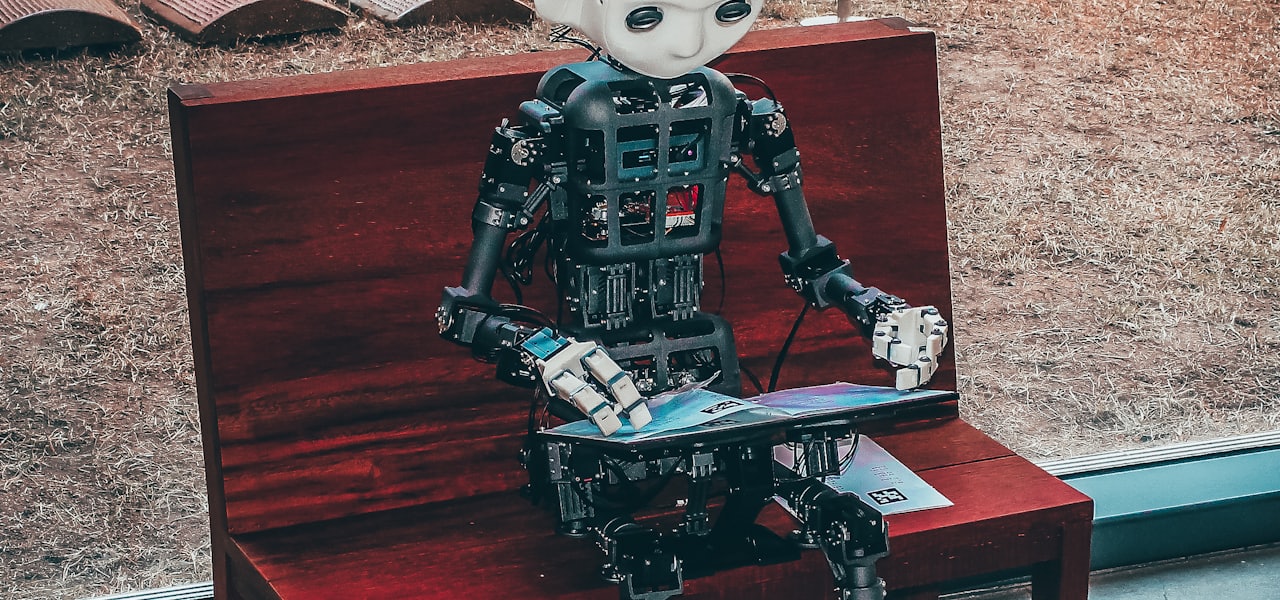
    The Afghan Girls Robotics Team, also known as the Afghan Dreamers, is an all-girl robotics team from Herat, Afghanistan, founded through the Digital Citizen Fund (DCF) in 2017 by Roya Mahboob and Alireza Mehraban. It is made up of girls between ages 12 and 18 and their mentors. Several members of the team were relocated to Qatar and Mexico by humanitarian and tech entrepreneur Sarah Porter following the fall of Kabul in August 2021. A documentary film featuring members of the team, titled Afghan Dreamers, was released by MTV Documentary Films in 2023. == Origins == The Afghan Girls Robotics Team was co-founded in 2017 by Roya Mahboob, who is their coach, mentor and sponsor, and founder of the Digital Citizen Fund (DCF), which is the parent organization for the team. Dean Kamen was planning a 2017 competition in the United States and had recruited Mahboob to form a team from Afghanistan. Out of 150 girls, 12 were selected for the first team. Before parts were sent by Kamen, they trained in the basement of the home of Mahboob's parents, with scrap metal and without safety equipment under the guidance of their coach, Mahboob's brother Alireza Mehraban, who is also a co-founder of the team. == 2017 and 2018 == In 2017, six members of the Afghan Girls Robotics Team traveled to the United States to participate in the international FIRST Global Challenge robotics competition. Their visas were rejected twice after they made two journeys from Herat to Kabul through Taliban-controlled areas, before officials in the United States government intervened to allow them to enter the United States. Customs officials also detained their robotics kits, which left them two weeks to construct their robot, unlike some teams that had more time. They were awarded a Silver medal for Courageous Achievement. One week after they returned home from the competition, the father of team captain Fatemah Qaderyan, Mohammad Asif Qaderyan, was killed in a suicide bombing. After their United States visas expired, the team participated in competitions in Estonia and Istanbul. Three of the 12 members participated in the 2017 Entrepreneurial Challenge at the Robotex festival in Estonia, and won the competition for their solar-powered robot designed to assist farmers. In 2018, the team trained in Canada, continued to travel in the United States for months and participate in competitions. == 2019 == The Afghan Girls Robotics team had aspirations to develop a science and technology school for girls in Afghanistan. Roya Mahboob interfaced with the School of Engineering and Applied Sciences (SEAS), the School of Architecture, and the Whitney and Betty MacMillan Center for International and Area Studies Yale University to design the infrastructure for what they named The Dreamer Institute. == 2020 == In March 2020, the governor of Herat at the time, in response to the COVID-19 pandemic in Afghanistan and a scarcity of ventilators, sought help with the design of low-cost ventilators, and the Afghan Girls Robotics Team was one of six teams contacted by the government. Using a design from Massachusetts Institute of Technology and with guidance from MIT engineers and Douglas Chin, a surgeon in California, the team developed a prototype with Toyota Corolla parts and a chain drive from a Honda motorcycle. UNICEF also supported the team with the acquisition of necessary parts during the three months they spent building the prototype that was completed in July 2020. Their design costs around $500 compared to $50,000 for a ventilator. In December 2020, Minister of Industry and Commerce Nizar Ahmad Ghoryani donated funding and obtained land for a factory to produce the ventilators. Under the direction of their mentor Roya Mahboob, the Afghan Dreamers also designed a UVC Robot for sanitization, and a Spray Robot for disinfection, both of which were approved by the Ministry of Health for production. == 2021 == In early August 2021, Somaya Faruqi, former captain of the team, was quoted by Public Radio International about the future of Afghanistan, stating, "We don’t support any group over another but for us what’s important is that we be able to continue our work. Women in Afghanistan have made a lot of progress over the past two decades and this progress must be respected." On August 17, 2021, the Afghan Girls Robotics Team and their coaches were reported to be attempting to evacuate, but unable to obtain a flight out of Afghanistan, and a lawyer appealed to Canada for assistance regarding the evacuation of the team members. As of August 19, 2021, nine members of the team and their coaches had evacuated to Qatar. The founder of the team, Roya Mahboob, and DCF board member, Elizabeth Schaeffer Brown, were previously in contact with the Qatari government to assist the team members in their evacuation from Afghanistan. By August 25, 2021, some members arrived in Mexico. Saghar, a team member who evacuated to Mexico, said, "We wanted to continue the path that we started to continue to go for our achievements and to go for having our dreams through reality. So that's why we decided to leave Afghanistan and go for somewhere safe" in an interview with The Associated Press. The members who have left Afghanistan participated in an online robotics competition in September and plan to continue their education. A documentary film titled Afghan Dreamers, produced by Beth Murphy and directed by David Greenwald, was in post-production when the team began to evacuate. == 2022 == The Afghan Dreamers were involved in a training program at the Texas A&M University at Qatar’s STEM Hub. == 2023 == The Afghan Girls Robotics Team had a booth at the 5th UN Conference on the Least Developed Countries, where they displayed some of the robots the team had constructed. == Afghan Dreamers documentary == The Afghan Dreamers documentary from MTV Documentary Films premiered in May 2023 on Paramount+. The film was directed by David Greenwald and produced by David Cowan and Beth Murphy. In a review for Screen Daily, Wendy Ide wrote, "This film, with its likeable cast of girl nerds and positive message, should enjoy a warm reception on the festival circuit, and will be of particular interest to events seeking to showcase women's stories from around the world. It also serves as a timely cautionary tale – a case study on just how quickly the rights and the opportunities of women can be curtailed, at the behest of the men in power." == Honors and awards == 2017 Silver medal for Courageous Achievement at the FIRST Global Challenge, science and technology 2017 Benefiting Humanity in AI Award at World Summit AI 2017 Winner, Entrepreneurship Challenge at Robotex in Estonia 2018 Permission to Dream Award, Raw Film Festival 2018 Conrad Innovation Challenge, Raw Film Festival 2018 Rookie All Star – District Championship, Canada 2018 Asia Game Changer Award Honoree 2019 Inspiring in Engineering Award – FIRST Detroit World Championship 2019 Asia Game Changer Award of California 2019 Safety Award – FIRST Global, Dubai 2021 Forbes 30 Under 30 Asia 2022 World Championships, Genoa, Switzerland

    Read more →
  • Separable filter

    Separable filter

    A separable filter in image processing can be written as product of two more simple filters. Typically a 2-dimensional convolution operation is separated into two 1-dimensional filters. This reduces the computational costs on an N × M {\displaystyle N\times M} image with a m × n {\displaystyle m\times n} filter from O ( M ⋅ N ⋅ m ⋅ n ) {\displaystyle {\mathcal {O}}(M\cdot N\cdot m\cdot n)} down to O ( M ⋅ N ⋅ ( m + n ) ) {\displaystyle {\mathcal {O}}(M\cdot N\cdot (m+n))} . == Examples == 1. A two-dimensional smoothing filter: 1 3 [ 1 1 1 ] ∗ 1 3 [ 1 1 1 ] = 1 9 [ 1 1 1 1 1 1 1 1 1 ] {\displaystyle {\frac {1}{3}}{\begin{bmatrix}1\\1\\1\end{bmatrix}}{\frac {1}{3}}{\begin{bmatrix}1&1&1\end{bmatrix}}={\frac {1}{9}}{\begin{bmatrix}1&1&1\\1&1&1\\1&1&1\end{bmatrix}}} 2. Another two-dimensional smoothing filter with stronger weight in the middle: 1 4 [ 1 2 1 ] ∗ 1 4 [ 1 2 1 ] = 1 16 [ 1 2 1 2 4 2 1 2 1 ] {\displaystyle {\frac {1}{4}}{\begin{bmatrix}1\\2\\1\end{bmatrix}}{\frac {1}{4}}{\begin{bmatrix}1&2&1\end{bmatrix}}={\frac {1}{16}}{\begin{bmatrix}1&2&1\\2&4&2\\1&2&1\end{bmatrix}}} 3. The Sobel operator, used commonly for edge detection: [ 1 2 1 ] ∗ [ 1 0 − 1 ] = [ 1 0 − 1 2 0 − 2 1 0 − 1 ] {\displaystyle {\begin{bmatrix}1\\2\\1\end{bmatrix}}{\begin{bmatrix}1&0&-1\end{bmatrix}}={\begin{bmatrix}1&0&-1\\2&0&-2\\1&0&-1\end{bmatrix}}} This works also for the Prewitt operator. In the examples, there is a cost of 3 multiply–accumulate operations for each vector which gives six total (horizontal and vertical). This is compared to the nine operations for the full 3x3 matrix. Another notable example of a separable filter is the Gaussian blur whose performance can be greatly improved the bigger the convolution window becomes.

    Read more →
  • Israeli cybersecurity industry

    Israeli cybersecurity industry

    The Israeli cybersecurity industry is a rapidly growing sector within Israel's technology and innovation ecosystem. Israel is internationally recognized as a powerhouse in the cybersecurity domain, with numerous cybersecurity startups, established companies, research institutions, and government initiatives. Tel Aviv itself is being ranked 7th in annual list of best global tech ecosystems, as reported by the Jerusalem Post. == History == The roots of Israel's cybersecurity industry can be traced back to the country's strong focus on national security and intelligence. The establishment of elite military units such as Unit 8200, the Israeli Intelligence Corps unit responsible for signals intelligence and code decryption, played a significant role in the development of cybersecurity expertise in the country. Many former members of Unit 8200 have gone on to establish successful cybersecurity companies or join existing organizations, bringing their unique skill sets and experience to the private sector. == Market overview == As of 2024, Israel housed more than 450 cybersecurity startups and companies. In 2023, the value of exits by Israeli tech companies reached $7.5 billion. Israel's cybersecurity industry is characterized by a high concentration of startups develop new technologies in areas such as network security, endpoint protection, data security, cloud security, and threat intelligence. In recent years, the sector has attracted significant investment from both local and international venture capital firms, as well as major technology companies such as Microsoft, Google, and IBM. Several Israeli cybersecurity companies have gained global recognition and success, with some being acquired by major corporations or conducting successful initial public offerings (IPOs). === Key Israeli cybersecurity companies === Some key Israeli cybersecurity companies include: Check Point Software Technologies CyberArk Cato Networks Radware Wiz === Financial activity === Israel’s cybersecurity sector has seen significant financial activity. As of 2023, mergers and acquisitions in the cybersecurity sector totaled $2.8 billion. In the first quarter of 2024, the sector secured $846 million in private funding. == Background == The military experience helped much. Israel's mandatory military service, combined with the expertise developed within elite units such as Unit 8200, has fostered a strong talent pool with practical experience in cybersecurity. Israel's thriving startup ecosystem, often referred to as the "Startup Nation," has fostered an environment of innovation and collaboration that has contributed to the growth of the cybersecurity industry. Israeli cybersecurity companies often collaborate with international partners, both in the private and public sectors, to share knowledge and develop joint solutions. === Government Initiatives and Support === The government also supported well through various initiatives, such as the Israel National Cyber Directorate (INCD), which works to strengthen cybersecurity defenses and promote the development of the sector. === Academic institutions === Israeli universities and research centers are involved in cybersecurity research and education, contributing to the development of new technologies and training the next generation of cybersecurity professionals. Academic Tech transfer offices in Israel also facilitate the commercialization of cybersecurity technologies. Some academic institutions with cybersecurity laboratories include: Tel Aviv University Technion Ben-Gurion University

    Read more →
  • Colors!

    Colors!

    Colors! is a series of digital painting applications for handheld game consoles and mobile devices. Originally created as a homebrew application for Nintendo DS (as Colors!), which was since legitimately distributed on PlayStation Vita, iOS, and Android, the project eventually evolved into an officially licensed application for Nintendo 3DS (as Colors! 3D) and Nintendo Switch (as Colors Live). == History == === Colors! === Colors! was originally released in June 2007 as a simple homebrew painting application for the Nintendo DS. It was developed by Jens Andersson, a programmer and designer on sabbatical from the games industry who wanted to experiment with the potential of the new handheld platform. Shortly after, Rafał Piasek created an online gallery where users could upload paintings made with the program. Colors! quickly became one of the best-known homebrew applications on the Nintendo DS, and in September 2008, it was also released for the iPhone and iPod Touch. As of August 2010, it had been downloaded almost half a million times. It was voted the most popular homebrew application on the Nintendo DS by readers of the R4 for DS blog. Development of Colors! DS homebrew officially ended in December 2010 although the official gallery still accepted submissions from DS users until 2020 when Colors! Gallery was discontinued. === Colors! 3D === Colors! 3D is a successor to the application Colors! for the Nintendo 3DS. It was released as an officially licensed application for the Nintendo eShop in North America on April 5, 2012, and in the PAL region on April 19, 2012. It was later released in Japan on August 21, 2013, published by Arc System Works. Colors! 3D allows users to draw on five layers, each on their own stereoscopic 3D plane. Drawing is done on the bottom screen, while the top screen displays the painting in 3D. While drawing, players can use the various controls on the Nintendo 3DS to change layers, zoom and pan, and alter the pressure of their brush. Pressing the L button allows users to access a menu to change brush type, size, and opacity, modify the layers, use the camera to provide references, and more. When the user finishes their painting, they can export it to the SD card for viewing in the Nintendo 3DS Camera application. Users can also upload their finished creations to an online gallery, viewed on the 3DS or the official website. Gallery features include hashtags and the ability to follow artists and post comments. Each painting also features a replay feature that allows viewers to see how it was drawn. The application also features local multiplayer, allowing several people to work cooperatively on a painting. In April 2024, the developers of Colors! 3D collaborated with the Pretendo Network project to officially add support for the application, meaning Colors! 3D will continue to operate as normal when using Pretendo Network. ==== Reception ==== IGN gave the application a score of 9.0 and an Editor's Choice award, praising its simple interface and tutorials. Destructoid gave the app a 9.0, calling it "a simple and incredibly fun tool with an amazing community of artists proudly displaying their beautiful and funny 3D images." Nintendo Life gave the app a 9/10, stating, "Though lacking in any structured play, Colors! 3D’s robust free drawing system and unique ability to let anyone create their own three-dimensional artwork more than make up for this." === Colors Live === A Nintendo Switch successor called Colors Live (stylised as Colors L!ve) was released in 2020 after being funded via a Kickstarter campaign. This expanded upon the features of previous installments by adding new brushes, increasing the maximum number of layers to ten, and introducing blend modes. A new game mode called Colors Quest was also included. A pressure-sensitive pen called the Colors SonarPen was developed in collaboration with GreenBulb to facilitate drawing on the Nintendo Switch, and comes pre-bundled with physical copies of the game. ==== Colors Quest ==== This new mode acts as a story-driven adventure wherein players are given a daily drawing challenge with a specific theme and certain stipulations that must be fulfilled. Once the drawing is complete, players must anonymously score other players' submissions, these scores are then aggregated to produce a personal ranking that measures the improvement in the player's art skills over time.

    Read more →
  • Diia

    Diia

    Diia (Ukrainian: Дія [ˈd⁽ʲ⁾ijɐ] , lit. 'Action'; also an acronym for Держава і Я, Derzhava i Ya, IPA: [derˈʒɑwɐ i ˈjɑ], lit. 'State and Me') is a mobile app, a web portal and a brand of e-governance in Ukraine. Launched in 2020, the Diia app allows Ukrainian citizens to use digital documents on their smartphones instead of physical ones for identification and sharing purposes. The Diia portal allows access to over 130 government services. Eventually, the government plans to make all kinds of state-person interactions available through Diia. Diia was built in partnership with the United States and is poised to be shared with other countries. On the sidelines of the 2023 World Economic Forum in Davos, USAID Administrator Samantha Power said the US hopes to replicate the success of Diia in other countries. == History == Diia was first presented on September 27, 2019, by the Ministry of Digital Transformation of Ukraine as a brand of the State in a Smartphone project. Vice Prime Minister and Minister of Digital Transformation Mykhailo Fedorov announced the creation of a mobile app and a web portal that would unite in a single place all the services provided by the state to citizens and businesses. On February 6, 2020, the mobile app Diia was officially launched. During the presentation, Ukrainian President Volodymyr Zelensky said that 9 million Ukrainians now have access to their driver's license and car registration documents on their phones, while Prime Minister Oleksiy Honcharuk called the implementation of the State in a Smartphone project a priority for the government. In April 2020, the Ukrainian government approved a resolution for experimental usage of digital ID-cards and passports which would be issued to all Ukrainians via the Diia. On October 5, 2020, during the Diia Summit, the government presented a first major update of the app and web portal branded "Diia 2.0". More types of documents were added to the app as well as the ability to share documents with others via a single tap on a push-message. The web portal in turn expanded the number of available services to 27, including the ability to register a private limited company in half an hour. President Zelensky who opened the summit, announced that in 2021 Ukraine will enter the "paper less" mode by prohibiting civil servants from demanding paper documents. By the end of 2020, the app had more than six million users, while the portal had 50 available services. In March 2021, the Ukrainian parliament adopted a bill equating digital identity documents with their physical analogues. Starting on August 23, Ukrainian citizens can use digital ID-cards and passports for all purposes while in Ukraine. According to Minister of Digital Transformation Mykhailo Fedorov, Ukraine will become the first country in the world where digital identity documents are considered legally equivalent to ordinary ones. In September 2024, Diia launched an online marriage registration service, which can be beneficial especially for military personnel who spend much time on the frontline separated from their partners. In October 2024, Diia's online marriage service appeared in Time's Inventions of the 2024 list. In the first month of its operations over 1.1 million Ukrainians tried to make proposals using the technology, and 435 couples got married. == Benefits and challenges == The first and most obvious benefit is the convenience of such a platform. Citizens can have many documents on their smartphones at once, without concern about losing or damaging them. Whenever needed, they can just open an app on their smartphones and show/check the document they need. The idea is that Diia will help cut the bureaucracy associated with public services, which in turn will help fight corruption and increase government savings. Fewer people are needed to be employed in the public sector and fewer human to human interactions are supposed to happen. With the start of the program, already 10% of government employees were reduced, which contributes to hundreds of millions of dollars in savings, but besides this, the initiative also improves the speed, efficiency, and transparency of government services. In addition, the digitalization of the government sector helps to develop the whole IT industry in the country, people become more digitally aware and educated, this affects other sectors as well, increasing the spread of digital infrastructure and expediting the speed of overall digitalization. The UN E-government Development Index, which assesses the capabilities of governments to integrate its functions electronically, such as the use of internet and mobile devices, ranked Ukraine 69th in 193 countries surveyed in 2020. Despite its low ranking in the e-government development index, Ukraine made a big jump on the e-participation index, which they ranked 43rd out of 193 countries from 0.66 in 2018 to 0.81 in 2020 (un.org, 2020), suggesting that the government and its citizens are adapting the IT-based government functions. The main goal of e-government according to Perez-Morote et.al. (2020) is to have accountability and transparency among the countries involved. But to do so, there are several challenges that a country should assess first prior to implementing e-government. In the research written by Heeks (2001), the author identified 2 main challenges that countries face in the development of e-government, first is the strategic challenge which involves the preparedness (e-readiness) of the entire government system for electronic transformation, and second challenge is the tactical challenge where the government must design (e-governance design) a system where it can be understood by every user, it's important that the information that needs to be communicated to the consumers is received clearly. For the first challenge (e-readiness), Ukraine had an internet penetration rate of 76% in 2020 and is expected to grow to 82%, it is important that consumers have the internet access for it to enable the consumers to utilize the service. Another factor is the readiness of its institutional infrastructure, which means that the government has its own organization which is solely focused on implementing the e-government project. In the case of Ukraine, the e-governance team is led by Oleksandr Ryzhenko, and the country's e-governance initiative is even further strengthened by ensuring that the data and legal infrastructure are already prepared. Ukraine has done this by modernizing their legislation that is more appropriate in the digital service, and the data exchange solution used by Ukraine is called Trembita. The human infrastructure is also being updated, as competent individuals must be the one doing the task, hence, EGOV4UKRAINE was launched, this aims to get IT developers for developing a system for administrative services. These efforts by the Ukrainian government did not go unnoticed, and they received an award from the e-Governance Academy as "partner of the year 2017". For the second challenge, which deals with the system design, the success of Ukraine can be seen on the latest data of UNDP, where it shows a high increase in the E-participation index. In 2018, Ukraine ranked 75th it ranked 46th in 2020 (un.org, 2020). Despite visible success, the implementation of the e-government was accompanied by problems. Data leakage became the main one. In May 2020, the data of 26 million driver's licenses appeared in the public domain on the Internet. The Ukrainian government said the Diia app was not linked to a data breach, but it is impossible to say for certain. Any storage of official documents in electronic format is associated with the risk of their leakage. In addition, the Diia application still has data protection issues, as the required protection system has not been implemented. This is also compounded by the country's weak data protection legal regime. In addition, since 2023, Ukrainians are able to register their cars with this app. Issued license plates are not using regional codes, but they are using special codes starting with DI or PD. == Diia City == In May 2020, the government presented Diia City headed by Oleksandr Borniakov, a large-scale project which would establish a virtual model of a free economic zone for representatives of the creative economy. It would provide for special digital residency with a particular taxation regime, intellectual property protection and simplified regulations. Diia City concurrently imposes certain constraints on contracts involving individual entrepreneurs (FOPs). It also offers the benefit of tax rebates. Diia City garners endorsement from the Ukrainian government, believing it will support the country's position in the IT market. As of July 30, 2023, the program had more than 600 residents, including companies like iGama, Avenga, SBRobotiks, and Intellectsoft.

    Read more →